
"I just moved here from Florida."
That sentence contains at least five follow-up questions she WANTS you to ask. Where in Florida? What brought you here? How long have you been in the area? What do you miss? How does it compare to here?
She handed them to you on a silver platter. And you said, "Oh cool. I come here every week. I love this band. Ummm... pretty crowded tonight."
She smiled politely. Nodded. And never texted you back.
I was that guy for years. Talking too much. Listening too little. Panicking about my next sentence while she was literally feeding me the answers.
Then I found 22 rules that fixed the whole thing. Rule number one: shut up and listen. She'll tell you exactly what to say.
How to lead without being controlling
- Thread starter 2Rocky
- Start date

"You'll Never Feel READY to Walk Over"
Next Monday you'll feel more confident. After the gym you'll feel more confident. After one more drink you'll feel more confident. After you get a better haircut, a better jacket, a better job.
You've been "getting ready" for two years.
She's standing ten feet away right now. She'll be gone in four minutes. No amount of preparation will manufacture the courage that only comes from moving your feet.
Walk over. Stumble through the first sentence. Let it be clumsy. Let it be imperfect. You will feel more alive in those ten seconds than you have all month.
EyeBRollin
Master Don Juan
- Joined
- Oct 18, 2015
- Messages
- 10,536
- Reaction score
- 8,536
- Age
- 37
Guide rails vs. shackles.What is the difference between Leadership and Micromanaging?
This will free up more of ur time to do something else (thereby offering potential of growth) but you take all the responsibility of failure, should it occurs.
Micromanaging = You control people on a daily basis. Hour to hours, minute to minutes and this keeps you busy.
Minimal to negative growth.
Long term - counter productive.
Normally very dumb or intellectual challenge people will resort to doing this.

mrgoodstuff
Master Don Juan
"You'll Never Feel READY to Walk Over"
Next Monday you'll feel more confident. After the gym you'll feel more confident. After one more drink you'll feel more confident. After you get a better haircut, a better jacket, a better job.
You've been "getting ready" for two years.
She's standing ten feet away right now. She'll be gone in four minutes. No amount of preparation will manufacture the courage that only comes from moving your feet.
Walk over. Stumble through the first sentence. Let it be clumsy. Let it be imperfect. You will feel more alive in those ten seconds than you have all month.
I agree with this and in addition to dumb and intellectual people doing this, Narcissists and selfish people also resort to this as well.Leadership = empowering people around you.
This will free up more of ur time to do something else (thereby offering potential of growth) but you take all the responsibility of failure, should it occurs.
Micromanaging = You control people on a daily basis. Hour to hours, minute to minutes and this keeps you busy.
Minimal to negative growth.
Long term - counter productive.
Normally very dumb or intellectual challenge people will resort to doing this.
Here's an effective picture that is relevant to this topic.
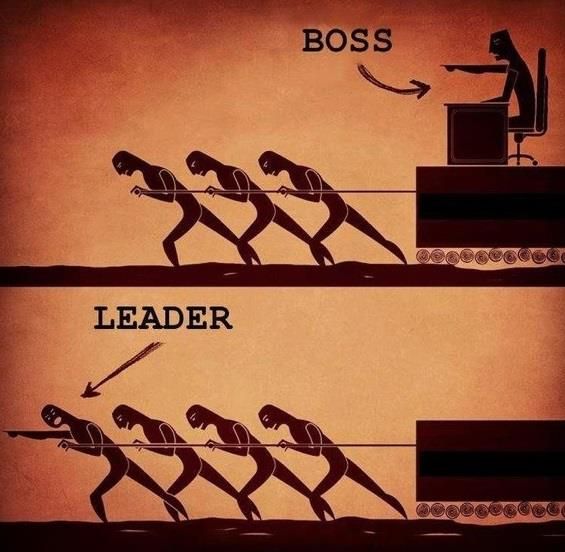

Let’s go do this
Why?
Good sensible explanation to her that she sees value in and agrees with.
If it benefits the follower, they Will follow.
On the other hand, if she can’t normally follow, she’s an uncontrollable loose cannon that may need to be thrown overboard …

Serenity
Moderator
The hard part about micromanaging is all the damn effort it takes to constantly monitor and correct. The hard part about leadership is to resist the urge to micromanage.
There is of course much more to leadership, but I don't feel like writing an article about it.
Exactly. Followers need to trust the leader, if he micros, it signals he doesn’t trust them and the trust/leadership bond is destroyed in the process …People who micromanage don't trust their followers and thus feel the need to constantly make sure every little thing is done "correctly". People who lead trust their followers abilities a lot more and supports rather than just corrects when things don't seem to go the right way.
The hard part about micromanaging is all the damn effort it takes to constantly monitor and correct. The hard part about leadership is to resist the urge to micromanage.
There is of course much more to leadership, but I don't feel like writing an article about it.
Like love, leadership requires trust from All participants.

BeExcellent
Master Don Juan
- Joined
- Dec 16, 2015
- Messages
- 5,422
- Reaction score
- 7,957
- Age
- 57
Bingo. And a big +1 to what @Spaz said too.Narcissists and selfish people also resort to this as well.
This is a good topic. Leadership inspires people, control intimidates and coerces people.
People love good leaders and despise controllers.
“The 22 Rules That Turned Me From Invisible to Irresistible With Women… Starting Tonight”
You can skip the expensive cars, the fancy clothes, and the endless gym selfies. Completely unnecessary.
I used to freeze the second a beautiful woman looked my way. Frustrated. Awkward. Watching other guys walk away with the girl while I stood there tongue-tied.
Then I discovered 22 simple rules that rewired my entire dating life. The anxiety vanished. Conversations flowed effortlessly. Women started chasing me for a change.
These rules trigger a woman's subconscious attraction switches. And you can start using them tonight.
TonyTenner
Senior Don Juan
- Joined
- May 4, 2020
- Messages
- 252
- Reaction score
- 186
- Age
- 43
1/ Honesty - he'll say "you're ****ing wrong" if he thinks my point is wrong
2/ Humility - If I tell him him "you're ****ing wrong" he'll accept it
3/ Glass half full - no matter how ****ed our company is he always thinks we'll WIN
4/ Hard work - he works every waking hour
5/ Balls - he take risks every day
6/ Honour - he treats all of his employees with respect and gives them every opportunity to prove themselves

Murk
Master Don Juan
Micromanagement usually comes from people with way too much time on their hands and inferiority complexes.People who micromanage don't trust their followers and thus feel the need to constantly make sure every little thing is done "correctly". People who lead trust their followers abilities a lot more and supports rather than just corrects when things don't seem to go the right way.
The hard part about micromanaging is all the damn effort it takes to constantly monitor and correct. The hard part about leadership is to resist the urge to micromanage.
There is of course much more to leadership, but I don't feel like writing an article about it.
This is about leading a woman in a relationship but all this relates strictly to the work environment.
How are you going to micromanage a woman? If you are doing that you need to seek help.
I feel this OP is already skewed as logically it makes no sense.
Please reword the OP if you want solid advice here.

CAPSLOCK BANDIT
Master Don Juan
- Joined
- Jul 29, 2020
- Messages
- 2,792
- Reaction score
- 2,125
Control is a much, much deeper concept than leadership; control is not obtained through leadership.