
"How I Made Sure No Woman Ever Friend-Zoned Me Again"
She calls you when her car breaks down. When she needs help moving. When some guy she's actually dating treats her badly.
You're the listener. The reliable one. The guy who would treat her so much better, if she'd just open her eyes.
She won't. You trained her to see you as the low-effort option — the friend who requires zero risk and zero investment. Every favor dug the hole deeper.
The "22 Rules" break the pattern. You'll stop auditioning for a role she already cast and become the man she chases instead. It starts with Rule 1.
How to lead without being controlling
- Thread starter 2Rocky
- Start date

"How I Made Sure No Woman Ever Friend-Zoned Me Again"
She calls you when her car breaks down. When she needs help moving. When some guy she's actually dating treats her badly.
You're the listener. The reliable one. The guy who would treat her so much better, if she'd just open her eyes.
She won't. You trained her to see you as the low-effort option — the friend who requires zero risk and zero investment. Every favor dug the hole deeper.
The "22 Rules" break the pattern. You'll stop auditioning for a role she already cast and become the man she chases instead. It starts with Rule 1.
EyeBRollin
Master Don Juan
- Joined
- Oct 18, 2015
- Messages
- 10,536
- Reaction score
- 8,536
- Age
- 37
Guide rails vs. shackles.What is the difference between Leadership and Micromanaging?
This will free up more of ur time to do something else (thereby offering potential of growth) but you take all the responsibility of failure, should it occurs.
Micromanaging = You control people on a daily basis. Hour to hours, minute to minutes and this keeps you busy.
Minimal to negative growth.
Long term - counter productive.
Normally very dumb or intellectual challenge people will resort to doing this.

mrgoodstuff
Master Don Juan
"So, What Do You Do for Fun?"
She asks it casually, mid-sip. And you feel the floor open up, because the honest answer is work, gym, and a couple shows you're half-watching.
Women rarely say this out loud, but a man with a life is attractive before he says a word. The guy who spent Saturday deep-sea fishing and came back with photos and a story — he walks in already interesting.
The "22 Rules" pushed me to build a life worth talking about. Turns out the fastest way to be interesting to women is to be interested in your own life first.
I agree with this and in addition to dumb and intellectual people doing this, Narcissists and selfish people also resort to this as well.Leadership = empowering people around you.
This will free up more of ur time to do something else (thereby offering potential of growth) but you take all the responsibility of failure, should it occurs.
Micromanaging = You control people on a daily basis. Hour to hours, minute to minutes and this keeps you busy.
Minimal to negative growth.
Long term - counter productive.
Normally very dumb or intellectual challenge people will resort to doing this.
Here's an effective picture that is relevant to this topic.
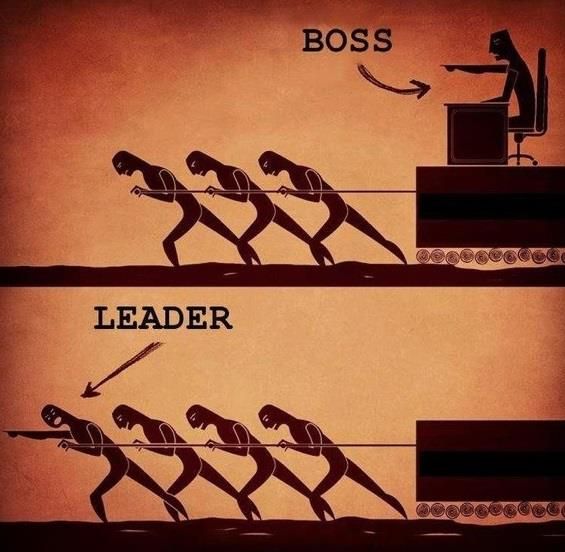

Let’s go do this
Why?
Good sensible explanation to her that she sees value in and agrees with.
If it benefits the follower, they Will follow.
On the other hand, if she can’t normally follow, she’s an uncontrollable loose cannon that may need to be thrown overboard …

Serenity
Moderator
The hard part about micromanaging is all the damn effort it takes to constantly monitor and correct. The hard part about leadership is to resist the urge to micromanage.
There is of course much more to leadership, but I don't feel like writing an article about it.
Exactly. Followers need to trust the leader, if he micros, it signals he doesn’t trust them and the trust/leadership bond is destroyed in the process …People who micromanage don't trust their followers and thus feel the need to constantly make sure every little thing is done "correctly". People who lead trust their followers abilities a lot more and supports rather than just corrects when things don't seem to go the right way.
The hard part about micromanaging is all the damn effort it takes to constantly monitor and correct. The hard part about leadership is to resist the urge to micromanage.
There is of course much more to leadership, but I don't feel like writing an article about it.
Like love, leadership requires trust from All participants.

BeExcellent
Master Don Juan
- Joined
- Dec 16, 2015
- Messages
- 5,422
- Reaction score
- 7,956
- Age
- 57
Bingo. And a big +1 to what @Spaz said too.Narcissists and selfish people also resort to this as well.
This is a good topic. Leadership inspires people, control intimidates and coerces people.
People love good leaders and despise controllers.
"Why Women Dump the Guys Who Try the Hardest"
You paid for dinner. You drove. You said "whatever you want is fine" every single time. All the effort, no expectations.
And she left anyway — probably for a guy who makes her pick up the pizza.
Painful. Also predictable. Her mind quietly concludes that anything requiring zero effort from her is worth exactly zero. You became a free sample, and free samples get taken for granted.
The 22 Rules flip the dynamic. Small shifts that get her investing effort, money, and time in you — until SHE'S the one afraid of losing YOU.
TonyTenner
Senior Don Juan
- Joined
- May 4, 2020
- Messages
- 252
- Reaction score
- 186
- Age
- 43
1/ Honesty - he'll say "you're ****ing wrong" if he thinks my point is wrong
2/ Humility - If I tell him him "you're ****ing wrong" he'll accept it
3/ Glass half full - no matter how ****ed our company is he always thinks we'll WIN
4/ Hard work - he works every waking hour
5/ Balls - he take risks every day
6/ Honour - he treats all of his employees with respect and gives them every opportunity to prove themselves

Murk
Master Don Juan
Micromanagement usually comes from people with way too much time on their hands and inferiority complexes.People who micromanage don't trust their followers and thus feel the need to constantly make sure every little thing is done "correctly". People who lead trust their followers abilities a lot more and supports rather than just corrects when things don't seem to go the right way.
The hard part about micromanaging is all the damn effort it takes to constantly monitor and correct. The hard part about leadership is to resist the urge to micromanage.
There is of course much more to leadership, but I don't feel like writing an article about it.
This is about leading a woman in a relationship but all this relates strictly to the work environment.
How are you going to micromanage a woman? If you are doing that you need to seek help.
I feel this OP is already skewed as logically it makes no sense.
Please reword the OP if you want solid advice here.

CAPSLOCK BANDIT
Master Don Juan
- Joined
- Jul 29, 2020
- Messages
- 2,792
- Reaction score
- 2,125
Control is a much, much deeper concept than leadership; control is not obtained through leadership.